
No products
Prices are tax included

.png)


SIKAFLEX 295 UV SIGILLANTE ADESIVO BIANCO ml.300
SIKAFLEX 295 UV SIGILLANTE ADESIVO BIANCO ml.300
Sikaflex®-295 UV is a single-component polyurethane adhesive of pasty consistency that polymerizes with exposure to atmospheric moisture. It is suitable for internal and external sealing applications and for 'gluing of glass in the marine field. Sikaflex®-295 UV meets the requirements established by the International Maritime Organization (IMO)
Benefits
- Excellent application properties
- Resistant to aging and atmospheric agents
- Suitable for glass
- Approved for OEM market
- Wheelmark approved
Uses
Sikaflex®-295 UV has been developed specifically for the maritime industry, where it is used to paste and seal plastic glass materials in boats and ships. Thanks to its excellent weather resistance, this product can also be used to seal joints in exposed areas. Suitable supports are aluminium (glossy or anodized), fiberglass (polyster resin), stainless steel, wood, two-component coatings and plastic glass materials (PC, PMMA). Request the manufacturer's opinion and perform tests on original media before using Sikaflex®-295 UV on materials subject to cracking stress. This product is only suitable for experienced professional users. Tests with substrates and real conditions must be performed to ensure adherence and compatibility of materials.
PRODUCT DETAILS
Chemical base: Monocomponent polyurethane
Color (CQP001-1): White
Mechanism of hardening: Polymerization with atmospheric humidity
Density: 1.3 kg/l
Tixotropy: Good
Application temperature: 10 — 35 °C
Skin training time (CQP019-1): 60 minutes A
Open time (CQP526-1): 45 minutes A
Hardening speed (CQP049-1): (see graph 1)
Volumetric waste (CQP014-1): %
Coastal hardness A (CQP023-1 /ISO 48-4): 35
Tensile strength (CQP036-1 / ISO 527): 2 MPa
Breaking extension (CQP036-1 / ISO 527): 500 %
Cutting propagation resistance (CQP045-1 / ISO 34): 5 N/mm
Serving temperature (CQP509-1 / CQP513-1): -50 ─ 90 °C
Stability (CQP016-1): 12 months B
CQP = Corporate Quality Procedures
A) 23 °C / 50 % u.r.
B) keep below 25 °C
MECCANISM OF INDUSTRY
Sikaflex®-295 UV polymerizes by reaction with atmospheric moisture. At low temperatures the water content in the air is generally lower and the hardening reaction proceeds a little slower (see graph 1).
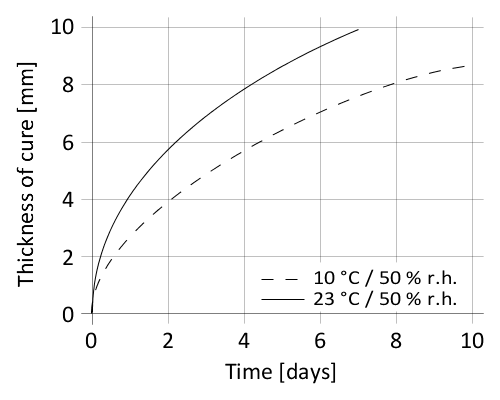
Graph 1: Sikaflex®-295 UV curing speed
CHEMICAL RESISTANCE
Sikaflex®-295 UV is generally resistant to fresh water, sea water, diluted acids and diluted caustic solutions; temporarily resistant to fuels, mineral oils, fats and vegetable oils and animals; not resistant to organic acids, glycolic alcohol, concentrated mineral acids and caustic or solvent solutions.
APPLICATION
Surface preparation
The surfaces must be clean, dry and free of any trace of fat, oil, dust and contaminants. Surface treatment depends on the specific nature of the substrates and is essential for a lasting bond. Tips for surface preparation can be found in the current edition of the appropriate Sika® pretreatment table. Consider that these suggestions are based on experience and must in any case be verified by testing on original substrates.
Application
Sikaflex®-295 UV can be extruded between 10 °C and 35 °C (climate and product) but changes in reactivity and application properties must be considered. The optimum temperature for substrate and sealing is between 15 °C and 25 °C.
Consider that viscosity will increase at low temperature. For easy application, condition the adhesive at room temperature before use. To ensure a uniform thickness of the joint line, it is recommended to apply the adhesive in the form of a triangular cord (see figure 1).
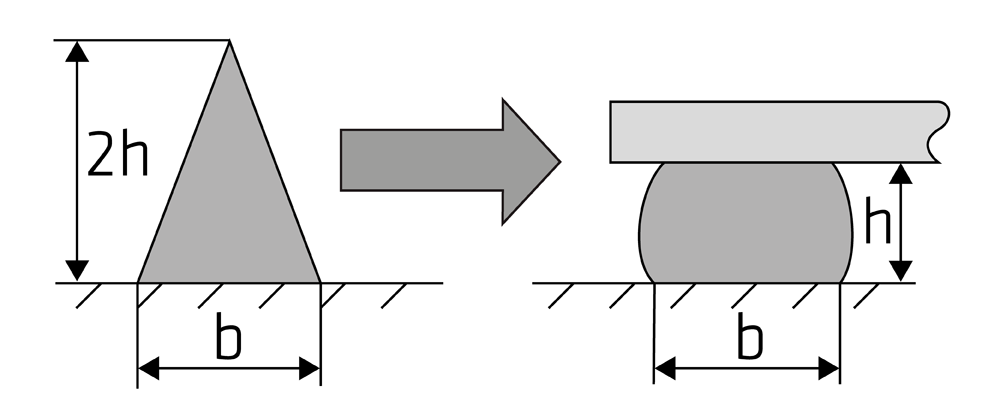
Figure 1: Recommended Cord Configuration
Sikaflex®-295 UV can be extruded with manual, pneumatic or electric piston guns as well as pump equipment. Open weather is significantly shorter in the warm and humid climate. Parts must always be installed within the open time. Never join the adhesive parts if the adhesive has built a skin.
Brushing and finishing
Tools and finishes must be executed within the time of the product's skin. It is recommended to use Sika® Tooling Agent N. Other finishing agents must be tested for suitability and compatibility before use.
Removal
Sikaflex®-295 UV not polymerized can be removed from tools and equipment with Sika® Remover-208 or another suitable solvent. Once hardened, the material can only be removed mechanically. The hands and exposed skin must be washed immediately with Sika® Cleaner-350H cleaning towels or a suitable industrial hand cleaner and water. Do not use solvents on the skin!
Overpainting
Sikaflex®-295 UV can be painted before and after skin formation. If the coating process takes place after the sealer has built a skin, the adhesion could be improved by treating the joint surface with Sika® Aktivator-100 or Sika® Aktivator-205 before the coating process. If the paint requires a cooking process (> 80 °C), the best performance is achieved by allowing the sealant to polymerize completely first. All paints must be tested by performing preliminary tests under production conditions. The elasticity of paints is generally lower than that of sealants. This could cause paint breakage in the joint area.


